If you are sourcing photobiomodulation (PBM) panels, flexible wraps, or LED caps for your brand, you’ve likely run into this hardware debate: Should your devices run on Continuous Wave (CW), Pulsed Light (Pulse Mode), or both?
While CW remains the cost-effective standard for basic manufacturing, an increasing number of distributors and MedSpas are requesting pulse-capable hardware. But is pulse mode actually worth the extra PCB design cost and component upgrade for your private label line?
Here is a practical breakdown of how light emission modes impact thermal management, tissue penetration, and overall product margins.
1. How CW and Pulsed Light Work in LED Hardware
Before comparing thermal limits, let’s look at what happens inside the driving circuit:
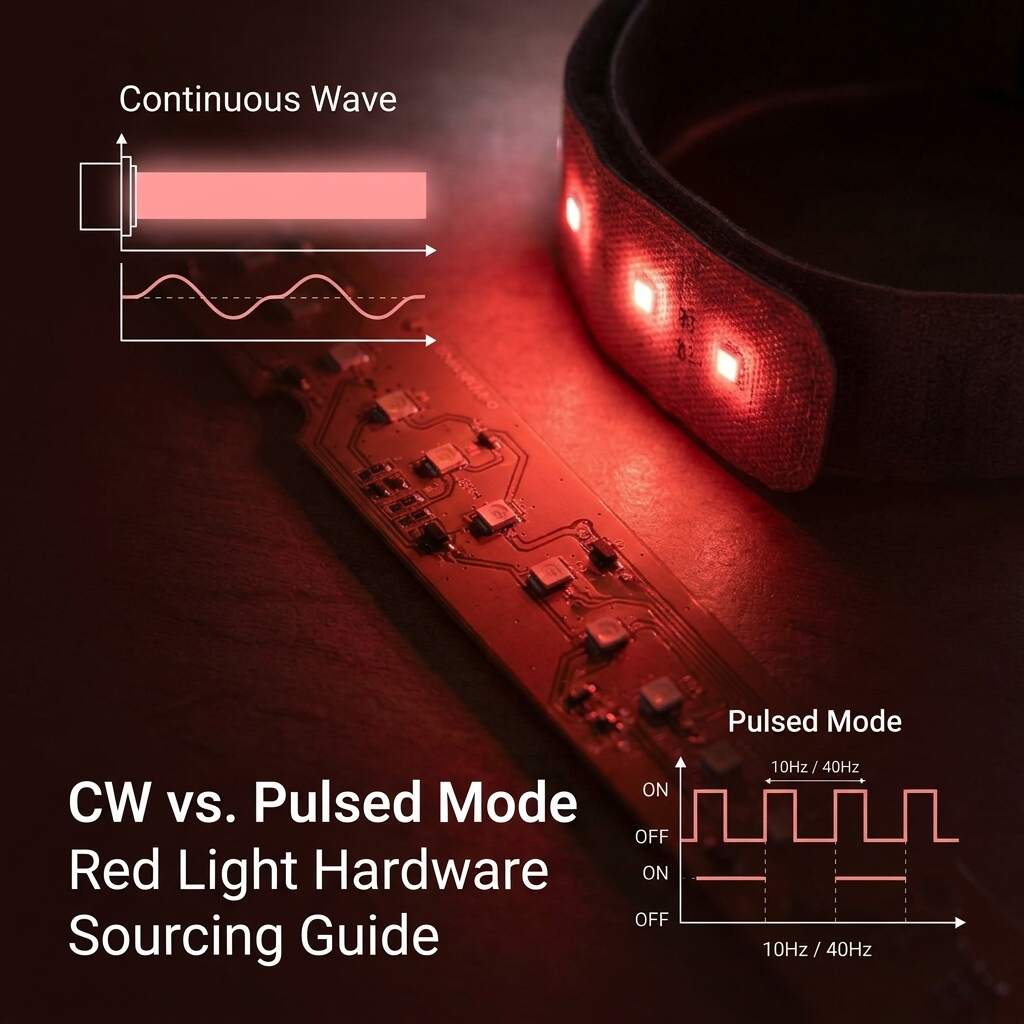
Continuous Wave (CW): The LEDs stay ON at a steady power output throughout the treatment timer. It delivers an uninterrupted stream of optical energy—simple, stable, and cost-effective to produce across standard OEM/ODM red light therapy lines.
Pulsed Light (Pulse Mode): The LED output alternates rapidly between “ON” and “OFF” cycles thousands of times per second (measured in Hertz, Hz). Using a standard 50% Duty Cycle (50% ON, 50% OFF), the LEDs rest between micro-pulses while maintaining peak optical intensity.
| Working Mode | Output Pattern | Thermal Response |
|---|---|---|
Continuous Wave (CW Mode) | ON ALL THE TIME | Continuous heat accumulation during extended use |
Pulsed Mode (e.g., 10Hz) | ON OFF ON OFF | Micro-cooling intervals during OFF cycles |
2. Three Technical Differences Impacting Your 2027 Sourcing Strategy
① Thermal Dissipation & Wearable Safety
Heat control is the primary driver of product returns and complaints for wearable light therapy products (such as flexible silicone masks, body belts, and scalp caps).
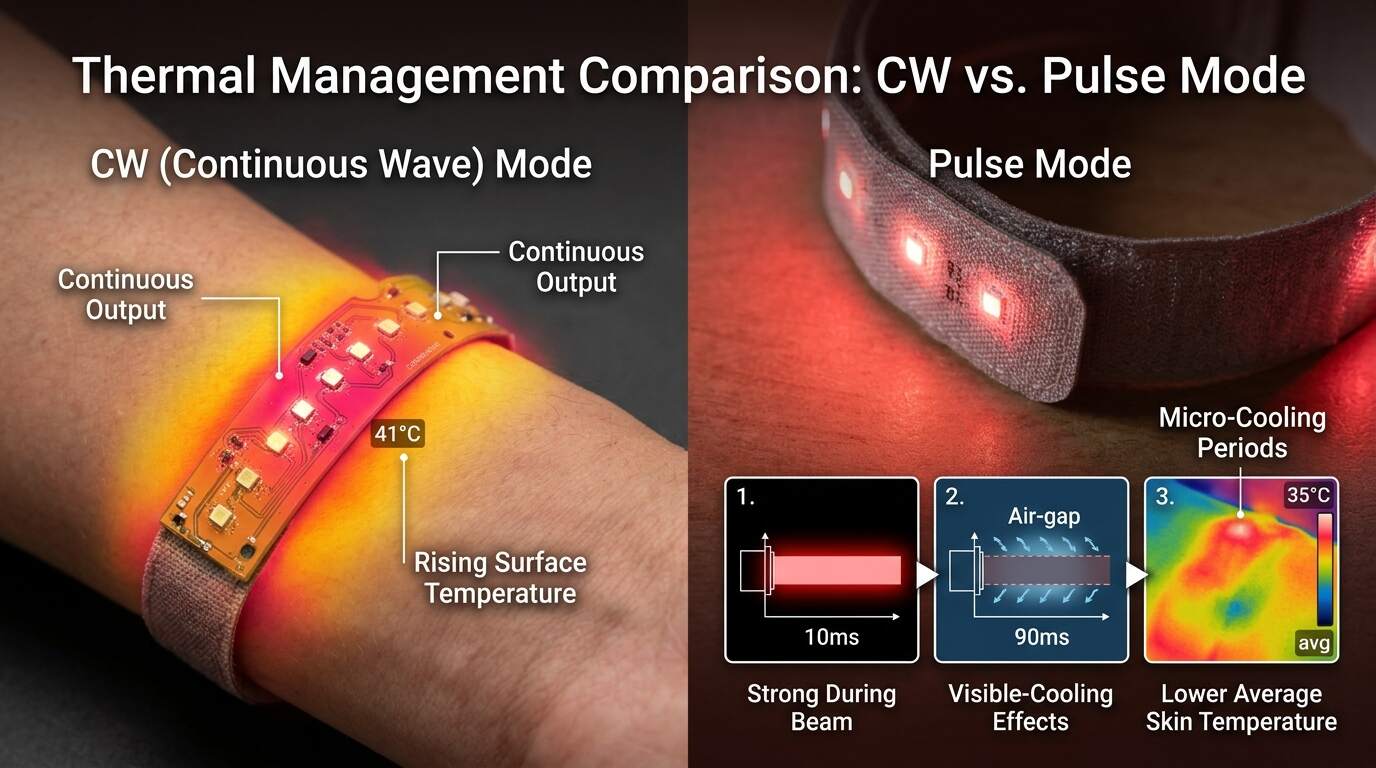
The CW Challenge: Driving continuous optical output (mW/cm^2) in tight flexible pads causes heat buildup over 15–20 minute sessions. To prevent skin discomfort, manufacturers are forced to limit current, reducing total effective irradiance.
The Pulsed Solution: Rapid micro-OFF cycles give both the skin-contact surface and diode substrate time to dissipate thermal energy. This allows your device to deliver higher peak power during the ON phase without exceeding comfortable thermal thresholds.
② Peak Power vs. Deep Tissue Penetration
CW Mode excels in surface-level applications—such as facial radiance and superficial collagen support—where continuous, steady photon delivery is ideal.
Pulsed Mode achieves a higher peak irradiance during each active pulse. In professional recovery hardware, higher peak photon density can reach deeper soft tissues before thermal limits are hit.
③ Presetting Frequencies for Market Differentiation
Offering customizable pulse frequencies gives your private-label line a clear selling point over basic ON/OFF panels in 2027/2028:
Standard Pulsing (10 Hz / 40 Hz): Widely utilized in brain/scalp care protocols and deep muscle relaxation.
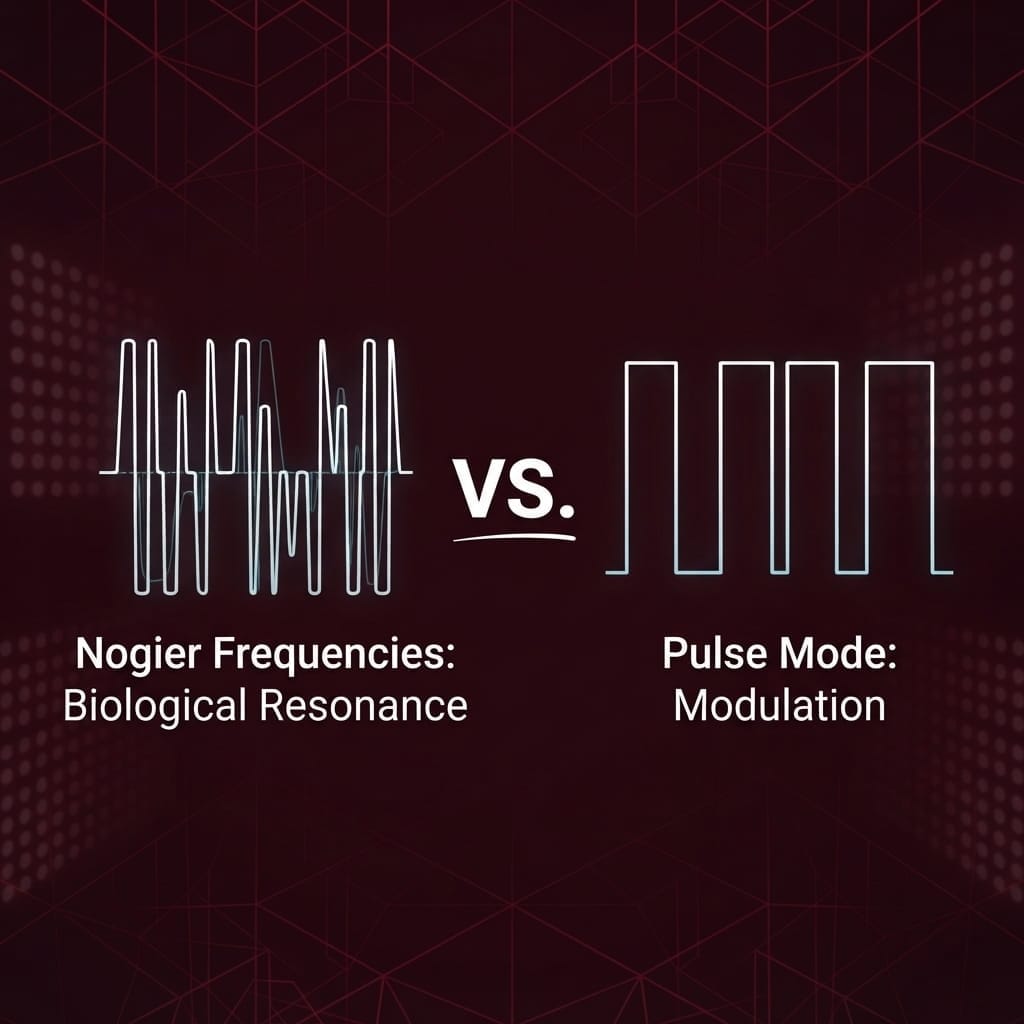
Biological Frequency Tuning: Presetting specialized protocols—such as Nogier Frequencies combined with red light—allows your brand to target premium wellness clinics and holistic practitioners.
3. Recommended Configurations for B2B Product Lines
| Form Factor | Recommended Drive Mode | Commercial Advantage |
|---|---|---|
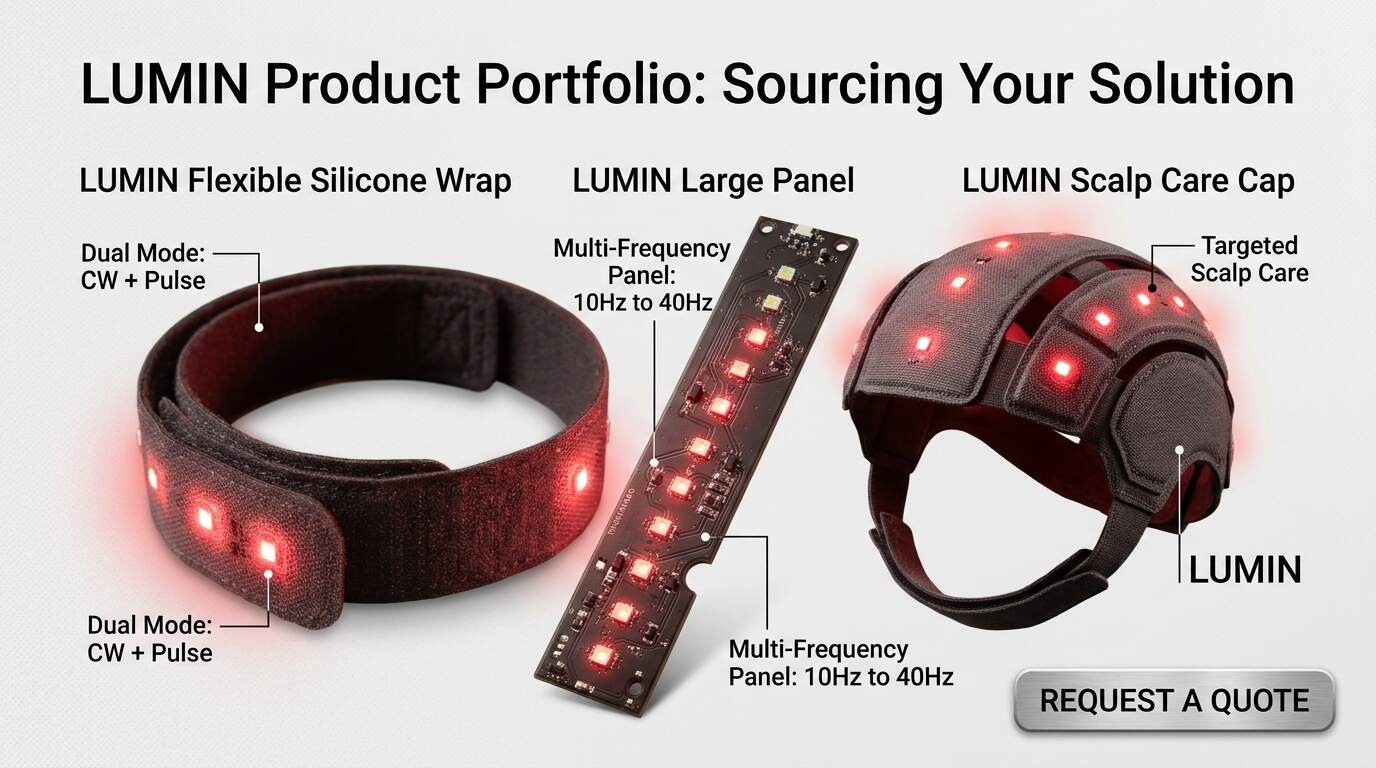
| Silicone Masks & Flexible Body Wraps | Dual Mode (CW + Low-Frequency Pulse) | Controls surface heat; prevents burn complaints; high wearing comfort. |
| High-Power Wellness Panels | Multi-Mode (CW + 10Hz/40Hz + Nogier Presets) | Offers maximum versatility for MedSpas and commercial venues. |
| Scalp Care Devices | Pulse-Focused (10Hz / 40Hz) | Prevents heat accumulation around hair follicles while delivering deep root stimulation. |
Choosing the Right Hardware Setup for Your Brand
Whether your target market demands budget-friendly CW devices or advanced pulse-capable setups, selecting the right emission control depends on your target customer and margin goals.
If you are exploring preset biological frequencies for your product lineup, check out our deep-dive comparison on Nogier Frequencies vs. Standard Pulse Mode to see how frequency control impacts hardware design. For step-by-step controller setup, read our technical walkthrough on How Your Red Light Device Sets a Nogier Frequency, or review our foundational Nogier Frequencies Red Light Therapy Guide.
Looking to launch or upgrade your private-label light therapy catalog? Explore custom specs and wholesale pricing directly on our Red Light Therapy OEM/Wholesale Portal.
Ready to Upgrade Your Private Label Line with Pulse Technology?
Transitioning from standard Continuous Wave to customizable Pulsed Mode is one of the most effective ways to differentiate your brand, boost retail margins, and reduce product returns due to heat discomfort.
At LUMIN, we specialize in non-medical LED therapy manufacturing and OEM/ODM solutions tailored for B2B distributors, MedSpas, and e-commerce brands:
Custom PCB & Controller Design: Support for 10 Hz, 40 Hz, and preset biological frequencies (including Nogier Frequency protocols).
Low MOQ Customization: Silk-screen logos, custom packaging, and pre-programmed timer modes.
Strict Quality Control: Full irradiance lab testing reports and safety compliance support for smooth global importation.
Let’s Build Your Next Best-Seller
Want to evaluate our LED wraps, panels, or scalp caps firsthand for your 2027 line?
to request a custom specification sheet, wholesale catalog, or sample unit for testing.